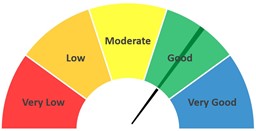

The Community Equipment Service (CES) market in England continues to play a critical role in supporting independent living through the provision of essential equipment.
Essex County Council (ECC) remains contracted with Medequip, who reported a £40m increase in turnover between 2023 and 2024. While profit margins across the sector declined sharply in previous years—Medequip’s profit fell from £2.7m in 2022 to £0.5m in 2023—2024 saw a significant recovery, with profit after tax rising to £3.6m.
The Community Equipment Service market has shifted sharply going into 2026, largely due to the collapse of NRS Healthcare in August/September 2025, which forced councils across England—particularly in London—to take urgent action to maintain continuity. Medequip remains the dominant provider and continues to deliver the Essex contract, supported by strong financial recovery through 2024, but the post‑NRS landscape has opened the door for other providers to re‑establish themselves.
Millbrook Healthcare are regaining market share. They have picked up several former NRS contracts, including major arrangements in Plymouth, Torbay and other areas where councils needed immediate replacements. Their interest in new opportunities – such as Birmingham’s market engagement – shows they are not simply filling gaps but are preparing to compete more actively for future work.
Provide Community has also stepped into the market, particularly in London, where they were appointed as the new community equipment provider in Lambeth following NRS’s liquidation. They have also taken over services in Islington under urgent contract arrangements. Their presence is becoming more visible, especially where boroughs needed rapid mobilisation.
It remains to be seen for certain whether Provide Community will seek to expand market share further or are simply content with revenues gained from ex-NRS contracts. This will be closely monitored, alongside upcoming local authority opportunities in the ICELS market, to assess competitive dynamics and strategic risks.
At the same time, some London councils have chosen to bring elements of provision in‑house or through council‑owned companies. Tower Hamlets moved to an emergency council‑run service after NRS collapsed, with the borough directly delivering equipment while a new provider is procured. The City of London transferred its service to Enabled Living Healthcare, a company owned by Newham Council, effectively shifting to an in‑house local authority model. This marks a noticeable trend in parts of London toward greater local control, particularly where councils felt vulnerable to market instability.
The wave of emergency direct awards issued in late 2025—often for short terms with optional extensions—means many contracts will now end around the same time. Boroughs such as Haringey and Ealing awarded urgent one‑year or short-term contracts due to the abrupt collapse of NRS, with extension options built in to allow breathing room. As a result, the period between 2028 and 2029 is likely to be highly congested, with numerous councils re‑tendering simultaneously. This risks overstretching providers, reducing competition, and potentially driving up costs at a time when the market is already under pressure.
In early 2025, several acquisitions and sales occurred among key equipment suppliers to Medequip. Notably, Seating Matters acquired the shower chair division of Care & Independence, and GBUK acquired their sling division—both transactions completed in May 2025.
Due to the confidential nature of these deals, Medequip was informed post-completion, which is standard in such circumstances. However, these changes have prompted operational concerns, particularly regarding significant staff turnover and the potential for alterations in supply chain processes.
Medequip are actively engaging with the affected suppliers to assess any potential impact on the Essex service. Discussions are already scheduled to ensure continuity, address any emerging issues, and maintain service quality.