
Advocacy refers to receiving support from another independent individual, (ie an advocate), to assist someone to express their opinions and make their views heard in order to lead the changes in their lives.
In circumstances where someone is unable to express their views in any way, Advocates are able to be involved to ensure that the outcomes of planning for the person’s future are fair and in their best interest. A formal Advocate is independent of the person’s family, funding authority and Service Provider.
Remember that the Care Act 2014 obligates the involvement of an Advocate where someone is considered to be unable to fully understand and participate in their social care review and is also seen as un-befriended.
What is the role of the Advocate?
- To form a professional relationship with the person in order to offer independent support to make the best decision possible in the given circumstances
- To empower the person in making choices to have more control over their life
- Ensures that they have the relevant information to make the right decisions about their goals in life and issues that matter to them
- Speaks on behalf of the person if they want them to during meetings and appointments
- Enables the person to express their thoughts and ideas to make informed choices
- Assists the person to represent their interests and exercise their rights
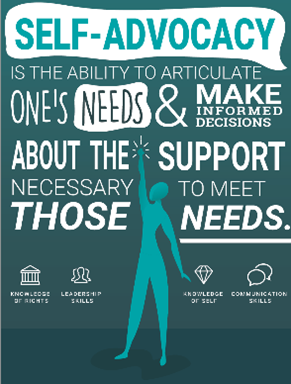
Self advocacy
Self-advocacy is the ability to understand and assert one’s own needs, rights, and interests effectively. It involves communicating, negotiating for oneself, and making informed decisions.
It means speaking up for yourself and making sure your needs and rights are understood and respected.
It’s about:
- Expressing Your Needs: Clearly saying what you need or want.
- Standing Up for Your Rights: Ensuring that your rights are respected.
- Making Decisions: Taking an active role in decisions that affect your life.
How are you making sure that the people you are undertaking reviews for, who are showing signs of ageing, are confident to continue voicing their opinions and making decisions both now and in the future?
Specialist Independent Mental Capacity Advocate (IMCA)
The IMCA role is to support and represent the person in the decision-making process. Essentially, they make sure that the Mental Capacity Act 2005 is being followed.
There are two circumstances where an IMCA would be involved in contributing towards best interest decisions for someone who lacks capacity and is un-befriended:
- Serious decisions around health treatments eg surgery, chemotherapy
- Accommodation changes
Independent Mental Capacity Advocates - further information
The Care Act 2014 – Part 1 Care and Support, section 67 – Independent Advocacy, states:
(2)The authority must, if the condition in subsection (4) is met, arrange for a person who is independent of the authority (an “independent advocate”) to be available to represent and support the individual for the purpose of facilitating the individual’s involvement;
(3)The relevant provisions are—
(a)section 9(5)(a) and (b) (carrying out needs assessment);
(b)section 10(7)(a) (carrying out carer’s assessment);
(c)section 25(3)(a) and (b) (preparing care and support plan);
(d)section 25(4)(a) and (b) (preparing support plan);
(e)section 27(2)(b)(i) and (ii) (revising care and support plan);
(f)section 27(3)(b)(i) and (ii) (revising support plan);
(4)The condition is that the local authority considers that, were an independent advocate not to be available, the individual would experience substantial difficulty in doing one or more of the following—
(a)understanding relevant information;
(b)retaining that information;
(c)using or weighing that information as part of the process of being involved;
(d)communicating the individual’s views, wishes or feelings (whether by talking, using sign language or any other means).

Questions for Practitioners
-
Are you ensuring advocates are being requested when relevant at reviews?
-
Have you thought about the role of advocacy in supporting someone with completing a will and/or end of life plans?
-
How could advocacy help where there might be conflict between what the person with a disability wants in their ageing well journey and what family/Carers believe is best?