Essex County Council - Provider Hub
Text size:

Frailty refers to a state of increased vulnerability, where the body has a reduced ability to recover from illnesses, injuries, or other stressors.

This condition often involves physical weakness, fatigue, and decreased endurance, making it harder to perform daily activities.

People with disabilities often experience frailty at a much younger age than the rest of the population.

This leaves them highly susceptible to increased risk of falls.

"Frailty in people with learning disabilities is a presentation of complex health needs, with life limiting reduction in functional ability, such as dysphagia, weight loss, frequent infections, reducing heart and lung function, pain, reducing mobility, falls and behavioural issues etc.

People with learning disabilities experience this at much earlier age and if care is not coordinated appropriately, patients are at risk of deterioration in physical and mental well-being" (Source - Essex learning disability partnership (ELDP) 2023)

Essex Learning Disability Partnership -  Significant Risk Tool

To help identify frailty risk in people with learning disabilities, ELDP have designed a Significant Risk Tool which can be completed via a referral to ELDP through the ‘Way In’ ELDP - referral

Access the Frailty Risk Tool

Falls and falls prevention

Falls are more common and are more likely to have serious outcomes, amongst older people with and without disabilities alike. In some cases, falls can lead to serious medical problems and a range of adverse outcomes for health and wellbeing.

An estimated one in three older adults, 65 years and older, fall each year. That number increases to an estimated one in two for those over 80.

In Essex it is estimated that:

  • 6,860 people with sight loss aged over 65 experience a fall per year.
  • Of these falls, 3,240 are directly attributable to sight loss.
  • 560 people aged over 65 with sight loss experience a severe fall per year (here, a severe fall is defined as a fall that results in hospital admission through A&E).
  • Of these severe falls, 270 are directly attributable to sight loss.


The Impact of sight loss and sight deterioration

There are ways to reduce falls and enable the people you support to stay as independent and healthy as possible.

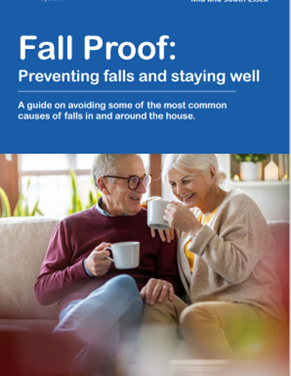
Fall Proof: Preventing falls and staying well - Mid and South Essex Integrated Care System a guide to avoiding some of the most common causes of falls in and around the house.

Community Falls Strength and Balance Exercise Service - Community Falls Strength and Balance Exercise Service | NELFT NHS Foundation Trust  

(Note that this service is up for re-tender in some parts of Essex and once the outcome is known, this link will be updated.)

The Community falls strength and balance exercise service offers structured muscle strength and balance exercise programme for the population aged 65 and older across the Basildon (including Wickford and Billericay) and Brentwood to reduce the falls risk and rate.  

Mindfulness in Fall Prevention - Mindfulness in Fall Prevention - Mindful

Be Able Like Mabel - Active Essex - an easy-to-use guide to encourage movement at home

Recommendations | Falls in older people: assessing risk and prevention | Guidance | NICE - This guideline covers assessment of fall risk and interventions to prevent falls in people aged 65 and over. It aims to reduce the risk and incidence of falls and the associated distress, pain, injury, loss of confidence, loss of independence and mortality.

Mid and South Essex Fracture service

Residents in mid and south Essex will benefit from a fracture service where hospitals and GPs work together across a large area.

The Fracture Liaison Service (FLS) in mid and south Essex is the first in the country to operate across a large geographical area, where it can provide consistent care for patients across GP, hospital, and community services.

The new service aims to strengthen bones in those aged over 50, reduce fractures and free up hospital beds.

Find out more information about this by clicking on this link m- First-of-its-type NHS service to improve bone health and prevent fractures - Mid and South Essex Integrated Care System


Essex RECONNECT initiative 2024

Empowering Essex: New 'Reconnect' initiative builds on successful Prevention and Enablement Model to enhance lives through physical activity. - Active Essex

This service will be community-based and will use physical activity as a tool to build and maintain physical, mental and emotional wellbeing. With a person-centred and holistic approach at its core, the service aims to empower individuals to achieve their goals and lead fulfilling lives.

Councillor John Spence, Cabinet Member for Health, Social Care and Integration said; “The benefits from being physically active are well documented. Our successful trial programme has now demonstrated the major role physical activity can play in increasing the confidence and independence of people living with a disability or long-term health condition. 

The introduction of Reconnect is genuinely pioneering work, building on previous programmes and supporting residents’ health and wellbeing. 

By enabling people to live more independently, and therefore have less need for health and care services, this is a real win-win for Essex.”

To find out more about the Reconnect programme follow this link: https://www.activeessex.org/local-delivery-pilot/our-bigger-projects/reconnect/

Take a look at this Activity Finder | Active Essex – where a range of activities that people can be encouraged to join in to keep fit and active, make new friends and improve mobility can be found.


Technology and falls prevention

Technology can help reduce the number of avoidable hospital admissions and emergency calls relating to falls. It can also help people live more independently and safely.

"Fall detection technology has the power to revolutionise how organisations provide care to older people, as well as improve older people’s lives for the better. Wall-mounted sensors in the older person’s bedroom can spot if they fall, alerting carers who can attend to them quickly." (Source: Anthropos)

Fall detection technology delivers significant benefits to all sides, including:

  • The older person experiencing fewer falls and avoiding hospital stays
  • Longer-lasting, more independent living
  • Reassurance to their family that they’re in good hands
  • Cost savings to the NHS
  • More efficient staff scheduling in care home

Find out what the ECC Lead for TEC has to say about falls detection technology by clicking on the following link - ECC Fall Detection TEC by Anthropos

What to do if I fall

Falls home safety checklist

Falls prevention booklet

“Have the people that you support who are showing signs of ageing, had recent and regular sight checks?”

You must ensure that this does not get overlooked, particularly with people who are unable to say that something is changing or may not have noticed for themselves. Be mindful of the increased risks of falls that may occur as a result of this.
Last updated: 13/02/2025